
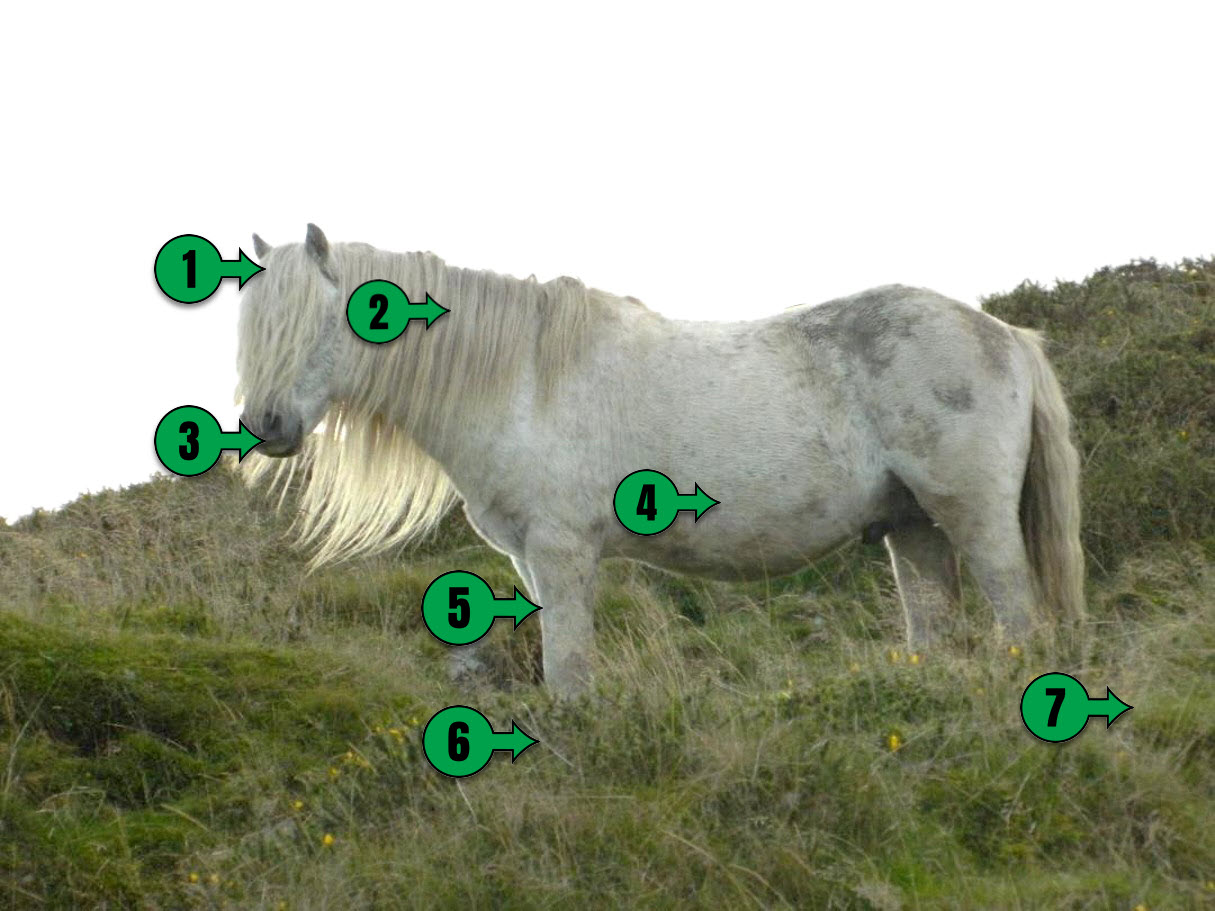
Exceptional memory allows ponies to find food throughout the year and follow set routes across the moor for minimum impact on the environment, helping to preserve bogs, wetlands and woodlands, and the rare flora and fauna that live there.
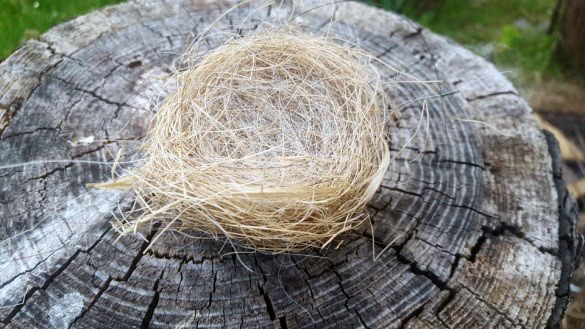
Mane and tail collect and disperse seeds and pollens. Birds also use mane and tail hair to build durable nests for young.
Prehensile upper lip is able to carefully select particular plants, allowing biodiversity to thrive.
A highly effective digestive system means ponies are able to survive on less, and lower quality, food than cattle and sheep.
Short, strong legs cover difficult terrain with ease. The ability to travel to find diverse food sources helps maintain Dartmoor’s landscape.
Small hooves have minimal impact on
the surface of the moor
Nutrient-rich dung provides food for many insects, including essential pollinators like bees.
During the summer, purple moor grass, scarcely eaten by cattle, makes up 20% of a Dartmoor Hill Pony’s diet. In the UK, the spread of purple moor grass has frequently been at the expense of more diverse upland heath and mire habitats.
They avoid heather, which invaluable pollinators like bees thrive on, and which grazing prescriptions often aim to protect.
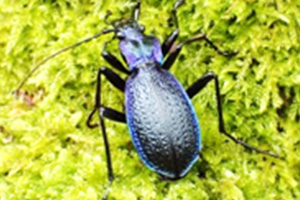
Conservation grazing in places like Yarner Wood helps ensure the survival of rare species such as the Blue Ground Beetle, listed as near-threatened on the IUCN Red List.
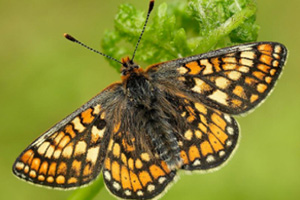
Controlled grazing ensures the survival of rare habitats, like Rhôs pasture, where threatened species, like the Marsh Fritillary Butterfly, thrive.
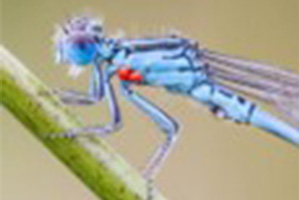
Dartmoor Hill Ponies maintain woodlands and marshes which are home to newly discovered species like Heckford’s Pygmy Moth and the globally threatened Southern Damselfly.
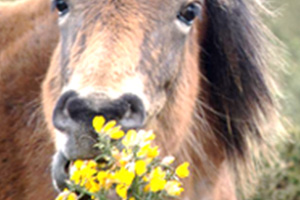
Dartmoor Hill Ponies like to graze on gorse, which heathland grazing prescriptions often aim to control.