
- Here: only found on Dartmoor.
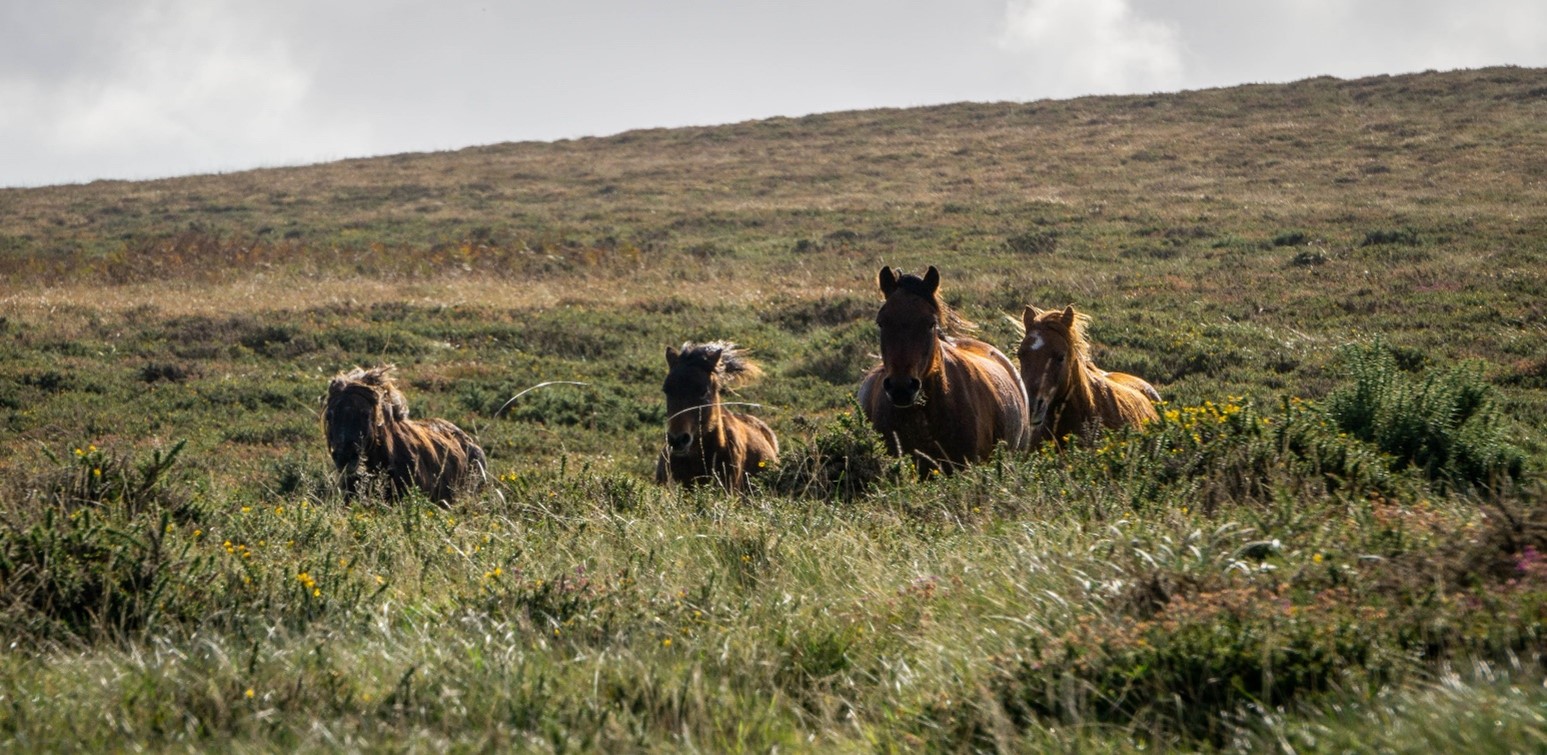
- Semi-wild: owned, distantly managed for welfare, but live a natural herd life (stallion, harem of mares, self-sustaining) on the expanses of Dartmoor. They are England’s last semi-wild equine herds.
- Native: historical and archaeological record shows a continuous history of these herds on Dartmoor for at least 4,000 years (and may hold Ice Age equine genetics – watch this space).
- Only just recognized: listed in 2021 by British Breed Revival Trust and in 2023 put on the Rare Breed Survival Trust Watchlist.
- Few: under 1000 breeding mares means they are classed internationally as Endangered. Any further reduction in numbers will make the population genetically unviable. Currently 1 pony per 64 hectares.
- Rare: have rare alleles linked to thriving and surviving harsh landscapes and climates only known in one other type of equine internationally. Free of Arab horse influence. Used in scientific research as a reference point for the archetypically British equine.
- Enhancing biodiversity: conservation grazing by Dartmoor Hill Ponies leads to greater biodiversity, particularly supporting habitats for the rare Marsh Fritillary Butterfly and suppressing invasive Molinia. Because of their rare alleles, they can conservation graze, even at high altitudes, year-round.
- Loved: by visitors to Dartmoor and those who live here. An intrinsic part of the Dartmoor landscape.
- Part of Dartmoor Culture: our Commoners still have the skills, seasonal activity and language that goes with being the guardians of these herds.
- Leared: each herd’s stallion keeps them in the right place on the moor and helps balance out grazing. (strong stallion - best grazing, more mares, weaker stallion - less favourable grazing, less mares).
- Protected: The Dartmoor Hill Pony is classed by Defra as Endangered as defined by the United Nations (Food and Agriculture Organisation).
So why are these ponies still threatened: by government agricultural and environmental policy – especially the design of agri-environment schemes such as ELMs?
The DHPA and Friends of the Dartmoor Hill Pony charity lobby to keep these herds on Dartmoor and support commoners who do: www.dartmoorhillpony.com supported by the charity Friends of the Dartmoor Hill Pony: www.friendsofthedartmoorhillpony.co.uk www.wildtowonderful.org
Help us keep the semi-wild Dartmoor Hill Pony herds on Dartmoor.
Join the Dartmoor Warriors! Facebook page to get involved!